
When to open it: a beginner's guide to drinking windows
How to tell when a bottle is ready, from joven to Gran Reserva. A friendly framework for reading drinking windows on Tempranillo, Riesling and anything you are keeping.

Every collector eventually asks the same question, often standing in front of the rack at 7pm with friends already on the sofa. Is this one ready? The honest answer is that there is rarely a single perfect night. There is a window, and the bottle is either inside it, on the way in, or on the way out.
This piece is the framework we keep coming back to. Once you internalise it, every other decision about your cellar (what to buy, where to put it, when to share it) becomes easier.
Forget "peak." Think window.
The word peak makes it sound as if a wine climbs to a single summit on a single Tuesday in 2031. It does not. A serious red ages along a curve that flattens out for years, and an off-dry Riesling will hold a plateau most of us would call wonderful for a decade or more.
What you really want to know is whether the bottle is inside its drinking window, the span where it shows what it was made to show. Inside that span there is usually a sweet spot, but the edges are where it gets interesting. The early edge gives you primary fruit and tension. The late edge gives you leather, tobacco, dried citrus, the savoury stuff. Both are valid. Your job is to pick which version of the wine you want tonight, then choose a bottle that is sitting in the right phase.
The three phases inside the window
A useful mental model, borrowed from how Rioja describes its own ageing classifications, is to think of three phases.
Primary fruit (years 0 to ~5 for serious reds, 0 to 2 for whites). The wine still tastes of the fruit it came from: red cherry, plum, citrus, stone fruit. Oak, if any, sits on top. Tannins for reds are firm. This is when joven and many Crianzas are at their best.
Evolving (roughly 5 to 15 for top reds, 3 to 8 for ageworthy whites). Primary fruit calms down. Secondary and tertiary notes appear: dried fruit, baking spice, a sweet beeswax thing on whites, a touch of leather on reds. Tannins for reds round out. Most Reservas sit here.
Tertiary (15 onwards for Gran Reserva, longer for the very best). Fruit recedes; the wine becomes savoury. Leather, tobacco, forest floor, dried orange peel, sometimes a salty almost umami quality. Texture turns silky. This is where Gran Reserva Rioja is famously meant to be drunk, and where Wine Folly notes that top Tempranillos at 20 years soften and subtly sweeten with nutty, dried-fruit character.
The drinking window usually spans the back half of phase two and most of phase three. Phase one wines are not "wrong" to open, but you are drinking a version of the wine the producer did not necessarily build for.
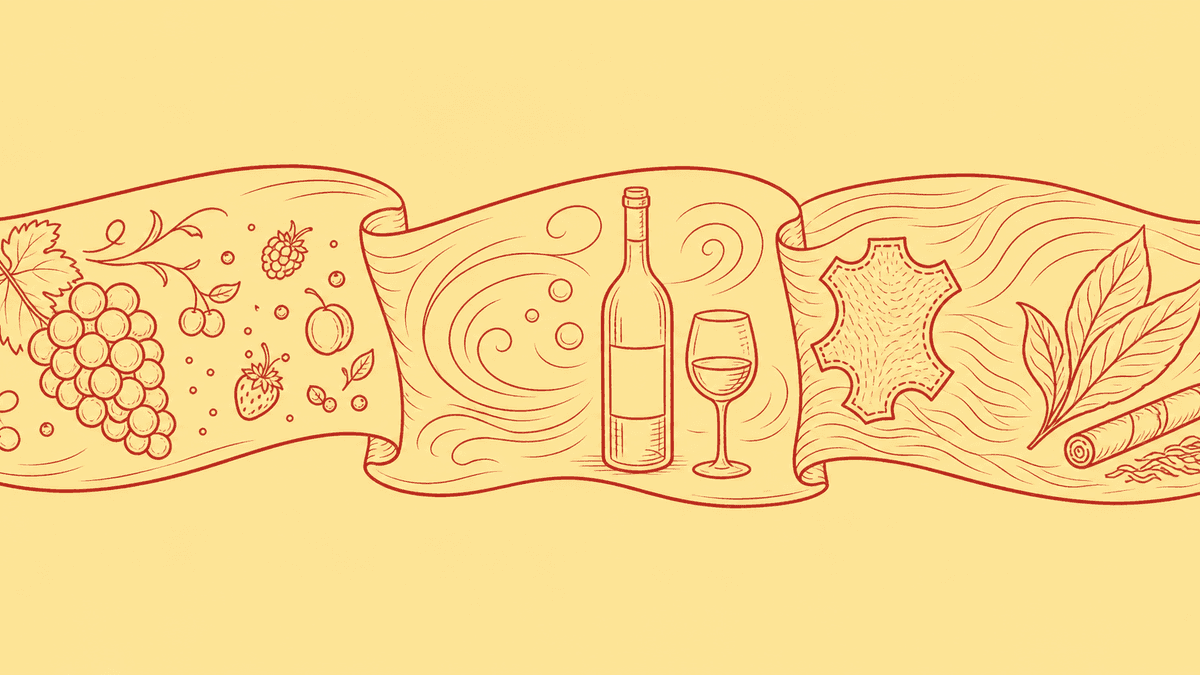 The three phases of a serious Tempranillo. The drinking window sits across phases two and three.
Where to find a window
Four places, in order of usefulness.
1. The critic's note. Most reviews from Decanter, Wine Spectator, Wine Advocate and Jancis Robinson now include a drink-by range, written as "2026-2040" or similar. Take it as a guide, not gospel. Critics taste from young samples and tend to underestimate the back end on ageworthy wines.
2. Vintage charts. When the bottle has no published note, look up the vintage. Wine Spectator's Ribera del Duero chart and their Rioja chart tag each vintage as drink, hold, or past peak. Jancis Robinson's Rioja and Ribera chart goes back to 1982. Both are useful for orientation, neither is perfect on a bottle-by-bottle basis.
3. The producer. Big estates increasingly publish drinking windows for their current releases on their own site. Worth a Google before you commit.
4. Rules of thumb by region and variety. When all else fails, lean on the category. More on these below.
The rules of thumb
For Spain, the ageing class on the label does most of the work.
- Joven (no oak ageing). Drink within 3 to 5 years of vintage. Built for fresh fruit.
- Crianza. Drink between 4 and 10 years from vintage. The middle of phase one through the start of phase two.
- Reserva. Drink between 8 and 15 years from vintage. Comfortably evolving.
- Gran Reserva. Drink between 10 and 30 years from vintage. Top bottles from estates such as López de Heredia or La Rioja Alta can keep going far beyond. Decanter's 2025 Rioja Report on Reserva and Gran Reserva is a good current snapshot.
For other reference points: most off-dry German Riesling lives happily for 10 to 20 years; Champagne for 5 to 15 from disgorgement on vintage cuvées; classed-growth Bordeaux for 10 to 30; Albariño and most rosados under 3.
These are starting points, not laws. A serious Albariño from a top producer can comfortably go 5 to 7 years. A heavy Toro from a warm vintage can drink earlier than its Gran Reserva status suggests. If you want to go deeper into label markers, see our guide to reading a Spanish wine label.
How WineNest fits in
This is the part of cellar management that takes a lot of small judgements. Every bottle, every vintage, every producer. WineNest reads the label, identifies the producer and vintage, then attaches a drinking window pulled from critic data and producer norms, refined by what we know about how the wine is actually ageing in your storage conditions. You see a single answer per bottle: in window, approaching, or past. No spreadsheets, no mental arithmetic at 7pm.
The biggest mistake: opening serious wines too early
The bottles you reach for most are the bottles at eye level. The bottles at eye level are usually the ones you bought recently. And the ones you bought recently are usually the ones with the longest road still ahead.
This is how a fifteen-year-anniversary Gran Reserva gets opened at age four and tastes "fine, I guess." Phase one is not the wine that wine was meant to be. The fix is structural, not mental: put your long-haul bottles in a passive zone where you have to make a conscious effort to retrieve them, and stock your active zone with bottles that are genuinely in window now. We go into the layout in detail in our guide to organising a home cellar.
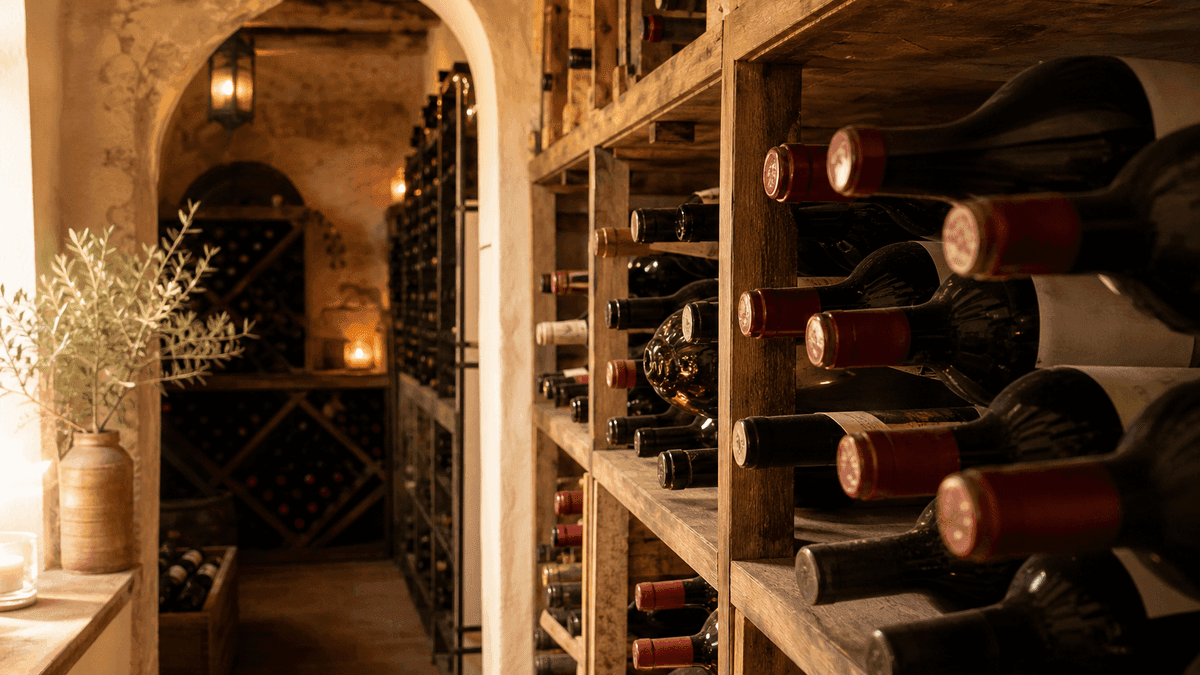 Active zone for bottles in window, passive zone for the long haul.
For a fully worked example of reading a drinking window for a real vintage, our piece on the Ribera del Duero 2018 vintage walks through one bottle from purchase to ideal opening.
Frequently Asked Questions
What if there is no published drinking window?
Fall back on category, vintage and producer. Joven and most rosados: drink young. Crianza and Reserva: use the rules above. For an unknown small producer, assume the lower half of the range; most wines are made to drink sooner than their label allows.
Does decanting change the window?
Decanting does not move the window, but it can let you drink the early edge of one. A young Gran Reserva opened five years in will show more if you give it two hours in a decanter. For anything over 15 years, decant briefly or not at all; the structure that holds an old wine together can disappear in 30 minutes of air.
How long does an opened bottle last compared to an unopened one?
Once the cork is out, you are working in days, not years. A young red with a stopper in the fridge: 3 to 5 days. A delicate older red: a single evening, sometimes two. White and rosé: 2 to 4 days. The unopened version of the same bottle, stored properly, can hold for the entire window.
If you only take one thing from this piece: a wine's window is a span, not a date, and your job is to know which span each bottle is in tonight. Once you have that, the rest is logistics.
Download WineNest and let it handle the logistics for you.