
Fino and Manzanilla: Spain's Best Summer Whites
Why fino and manzanilla are Spain's best summer whites: flor, Jerez vs Sanlúcar, the 2026 en rama releases, bottles from 8 EUR, and how to serve them.


Every July, the beach bars of Cádiz pour ice-cold glasses of the wines Spain largely keeps to itself. Fino and Manzanilla are pale, bone-dry, faintly salty whites from the Sherry Triangle, and they remain among the most undervalued wines anywhere: aged four or five years in a solera, grown on prized chalk soils, and still priced like house wine. If you are shopping for summer bottles, this guide covers what separates the two styles, the 2026 en rama releases, names worth buying at every price, and how to serve and keep them.
Flor, and why Jerez and Sanlúcar taste different
Both wines begin identically. Palomino grapes grown on brilliant white albariza chalk are fermented fully dry, fortified to around 15% alcohol and racked into old butts that are deliberately left part-empty. Across the surface of the wine grows flor, a veil of living yeast that seals it off from oxygen. For years the wine ages under that veil while the flor feeds on it, stripping out glycerine and leaving something leaner and more savoury than any table white: green apple, green almond, chamomile, bread dough, sea spray.
The two names are a matter of geography. Fino matures in Jerez de la Frontera and El Puerto de Santa María, inland towns where hot, dry summers thin the flor for part of the year. Manzanilla may only be aged in Sanlúcar de Barrameda, at the mouth of the Guadalquivir, where constant Atlantic humidity keeps the veil thick in every season. That unbroken flor tends to make manzanilla lighter on its feet, with a sharper saline snap; fino is usually a touch fuller and more pungent. Same grape, same method, two distinct wines separated by twenty kilometres.
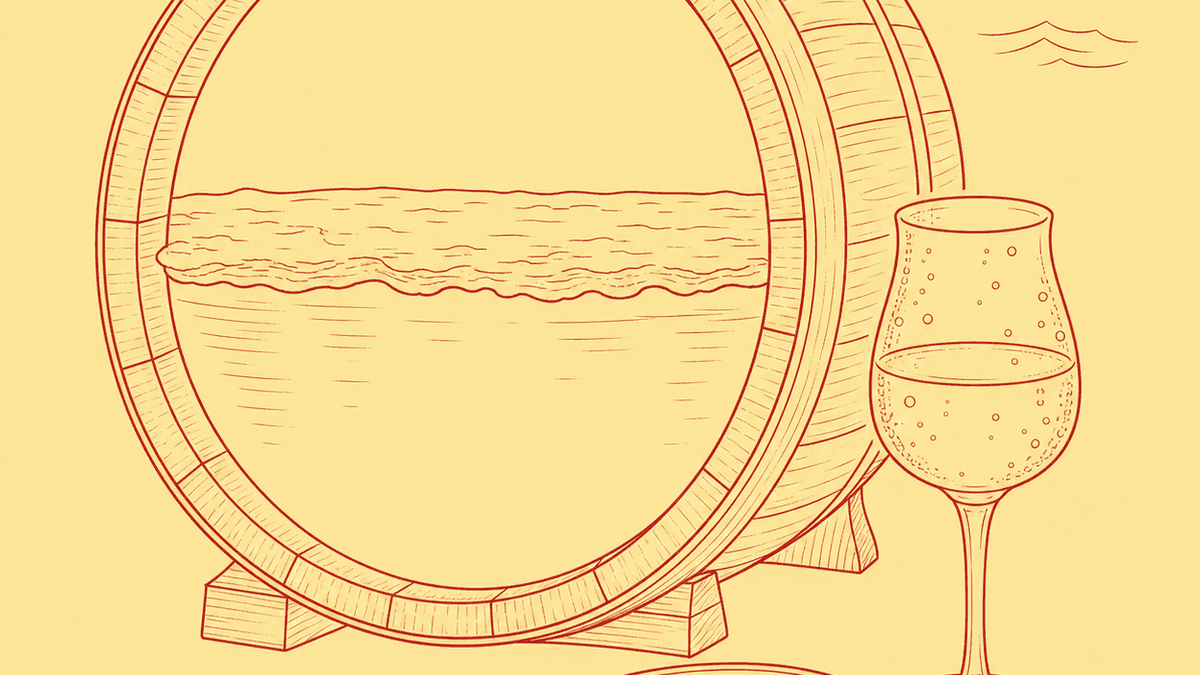 Flor, the living veil of yeast inside the butt, is what keeps fino and manzanilla pale, dry and saline.
The 2026 en rama releases
En rama means bottled almost straight from the butt, with little or no filtration, usually in spring when the flor is at its thickest. These bottlings are the truest snapshot of how sherry tastes in the bodega itself. González Byass presented Tío Pepe en Rama 2026 in April, the 17th edition, drawn from 95 butts selected at the Bodega de La Constancia by master blender Antonio Flores. A mild, very rainy winter produced an unusually vigorous flor this year, and the bottling reached shops in May. Over in Sanlúcar, Barbadillo bottles Solear en rama four times a year, one saca per season, and the Saca de Primavera is the one to chase for summer drinking.
There is real momentum behind these wines. Forbes reported in 2025 that sherry is staging a genuine comeback, with the dry, flor-aged styles leading the charge in bars from London to New York. Prices have not caught up with the attention yet, which is exactly why this is a good moment to buy.
Bottles worth buying, from €8 to €20
- La Guita Manzanilla (around €8). The Sanlúcar standard-bearer since 1852: taut, chalky and salty, and hard to beat for the money.
- Solear Manzanilla, Barbadillo (around €9). A shade rounder than La Guita, with a long chamomile finish. The half bottles are ideal for a two-person aperitivo.
- Tío Pepe Fino (around €10). The benchmark fino from Jerez: pungent, yeasty and bracing, and reliably fresh thanks to enormous stock rotation.
- La Ina Fino (around €12). A fuller, more textured Jerez style, made by Lustau since it took over this historic brand. A good step up for oloroso drinkers coming to fino.
- Callejuela Manzanilla (€15 to €20). The Blanco brothers, profiled on SherryNotes, farm their own albariza vineyards and bottle only their own fruit, a rarity in a region where most bodegas buy grapes in. Grower sherry with real vineyard character.
- Tío Pepe en Rama 2026 (around €18). The unfiltered spring saca described above: cloudy-gold, intensely saline, and worth every cent of the premium over the standard bottling.
Fino is a buy-fresh wine, which makes it exactly the kind of bottle that gets lost in a mixed case. WineNest records the date each bottle enters your collection, so you can see at a glance which fino has been sitting since last summer and pull it forward before it fades. It turns "drink it young" from good advice into something you actually do.
Serve it very cold, and finish the bottle in days
Temperature matters more here than with any other white. Serve at 6 to 8°C, straight from an ice bucket, exactly as the freidurías of Cádiz do. The traditional copita is charming and works well by keeping servings small and cold, but a standard white-wine glass filled a third of the way shows the aromas better; most sommeliers in Jerez now pour that way.
Then there is the open-bottle rule. Once the cork or stopper comes out, oxygen starts undoing what the flor spent years protecting. Re-stopper the bottle, keep it in the fridge, and finish it within three to five days. En rama versions fade even faster, so give them two or three. This is why La Guita and Solear both come in 37.5 cl half bottles: buy those if you drink a glass at a time.
What to eat with it
Few pairings in wine are as reliable as fino or manzanilla with salted and fried things. Salazones such as mojama, boquerones fritos, prawns straight off the plancha, marcona almonds and green olives all click with the wine's salinity. It is also the single best partner for jamón ibérico; our guide to pairing jamón ibérico with sherry goes cut by cut. Building a whole spread? Start with six dishes and six bottles for a tapas night. And if half your table insists on pink, our summer rosé guide covers the other fridge shelf.
Why fino has no place in your cellar
Here is the counterintuitive part for collectors: fino and manzanilla do not improve in bottle. All the ageing happens in the bodega, under flor; once bottled, that protection is gone and the wine slowly loses the tension that makes it special. Buy from shops that rotate stock quickly, check the back label for a bottling or saca date (most serious bodegas now print one), and drink within a year of bottling, ideally within months. En rama bottlings deserve even more urgency. None of this is a flaw. Like good bread, these are wines of the season, and treating them that way is the whole point.
FAQ
Is fino the same as dry sherry? Fino is one style of dry sherry. Amontillado, palo cortado and dry oloroso are also dry but oxidatively aged, so they are darker and richer. Fino and manzanilla are the palest and freshest styles, aged entirely under flor.
Does manzanilla taste of chamomile? The name comes from the Spanish word for chamomile, and many tasters do find a gentle chamomile note, but there is no flavouring involved. It is pure Palomino plus flor.
Can I drink a bottle opened last week? It will not harm you, but it will taste flatter and slightly nutty, closer to a light amontillado. Cook with it instead: it is superb in a fish stock or with sautéed mushrooms.
Fino and manzanilla reward drinkers who pay attention to dates, and that is easier with a cellar log than with memory. WineNest tracks the purchase date and drinking window of every bottle you own, so this spring's saca never becomes next year's regret. Download WineNest and keep your summer whites as fresh as the day they left Sanlúcar.