
Barbecue Wine Pairing: Match the Smoke, Fat and Char, Not the Meat
How to pair wine with barbecue by smoke, fat and char: named bottles for chuletón, secreto, sardine skewers and grilled vegetables, plus outdoor serving tips.

Most barbecue wine pairing advice sorts bottles by animal: one wine for beef, another for chicken, a third for fish. Over charcoal, that logic falls apart. What decides whether a bottle works is not the name of the meat but the three things the grill does to everything it touches: smoke, fat and char. Learn to read those three variables and you can pair an entire Spanish summer table, from chuletón to sardine skewers, without guessing.
Read the grill, not the recipe
Every dish that comes off the coals carries some mix of the same three signals.
Smoke is the friendliest of the three. As Wine Folly points out, the aromatic compounds in wood smoke overlap with the ones wine absorbs from oak barrels, which is why barrel-aged reds that would flatten a delicate stew feel right at home next to anything grilled. The smokier the dish, the more oak the wine can carry.
Fat sets your tannin budget. Tannin binds to fat and protein, so a dripping rib steak makes a structured red taste smoother, while the same wine against lean chicken breast turns harsh and drying. High fat, high tannin. Low fat, low tannin. It is the closest thing pairing has to arithmetic.
Char is the trap. Those blackened crusts and grill marks bring bitterness, and bitterness in the food amplifies bitterness in the glass. Char wants two things from a wine: ripe, generous fruit to cushion it, and enough acidity to reset your palate. What it punishes are lean, austere wines with nothing in the middle.
So before you shop, ask three questions about each dish: how smoky, how fatty, how charred? The answers matter more than the species.
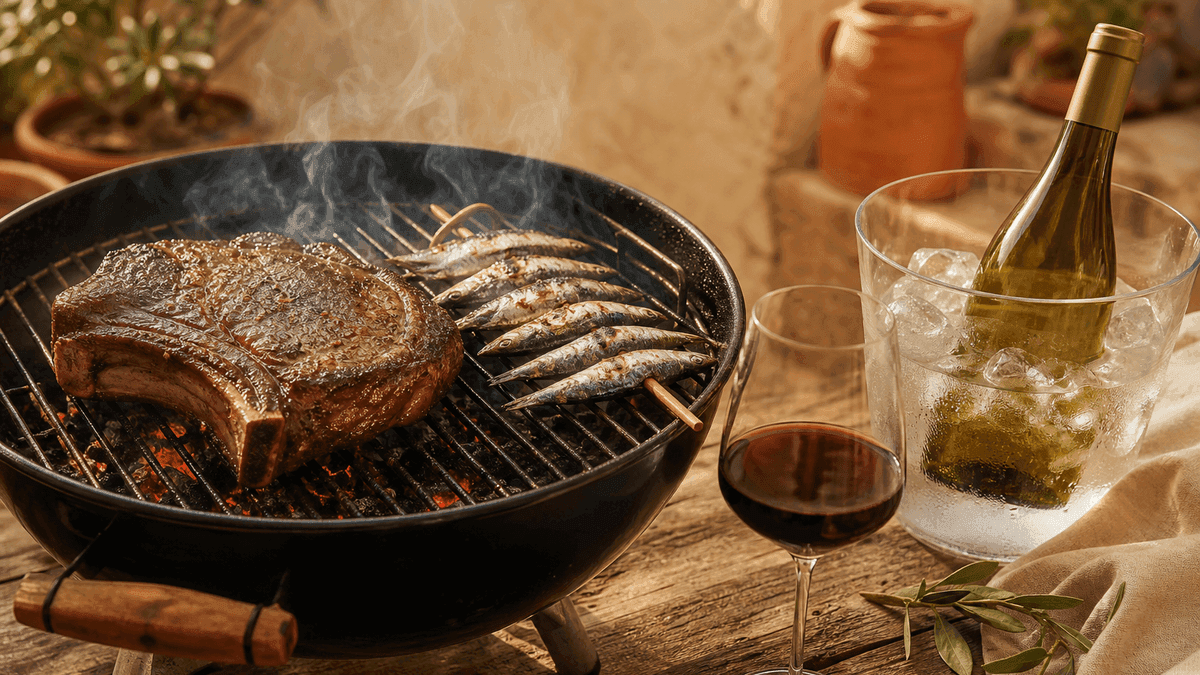 Smoke, fat and char decide the bottle; the ice bucket keeps it drinkable at 35 °C.
The Spanish grill table, dish by dish
Here is how the framework plays out across a typical Spanish summer barbecue, with bottles at more than one price for each dish.
Chuletón
A chuletón is a thick, bone-in rib steak, usually shared, always cooked hard over the coals so the fat cap crisps. Maximum fat, maximum char: this is the one dish that can absorb Spain's biggest reds. Toro's Tinta de Toro (the local strain of Tempranillo, covered in our guide to Tempranillo across Rioja, Ribera and Toro) and Jumilla's sun-baked Monastrell are the classic matches.
- Juan Gil 12 Meses (D.O. Jumilla, around €13): a year in French oak on top of ripe Monastrell fruit. Bodegas Juan Gil delivers remarkable depth for the money, and the oak echoes the smoke.
- San Román (D.O. Toro, around €40): old-vine Tinta de Toro from Bodegas San Román, powerful but polished, with the tannic spine a crisped fat cap deserves.
- Pintia (D.O. Toro, around €48): the Vega Sicilia family's Toro project. Recent vintages have been notably fresh for the region, which keeps a long steak dinner from getting heavy.
Secreto and panceta
Secreto is a fan-shaped Ibérico pork cut marbled like wagyu; panceta is thin-cut pork belly that turns to crackling on the grill. Both are very fatty but the flavour is sweeter and lighter than beef, so a chuletón-sized red would bury them. This is Garnacha territory, especially the pale, aromatic mountain style we profiled in our piece on Sierra de Gredos Garnacha. Its acidity slices through the fat and its red fruit flatters the pork's sweetness.
- Comando G Granito del Cadalso (Sierra de Gredos, around €15): the accessible entry into one of Spain's most admired Garnacha projects, floral and stony. Museum Wines calls the duo behind it a Garnacha revolution, and the hype is earned.
- Comando G La Bruja de Rozas (D.O. Vinos de Madrid, around €30): a step up in precision from the same cellar, silky and perfumed. Serve it cool.
Espetos de sardinas
Espetos are whole sardines skewered on a cane and grilled beside the embers, a Málaga beach institution. Oily fish, real smoke, plenty of salt: the answer is a coastal white with sharp acidity and no oak. Keep reds away entirely; tannin plus oily fish leaves a metallic taste.
- Txomin Etxaniz (D.O. Getariako Txakolina, around €11): lightly spritzy Txakoli from Hondarrabi Zuri grapes, bracing and faintly saline. Listed at Bodeboca for under €13.
- Mar de Frades Albariño (D.O. Rías Baixas, around €18): rounder and more aromatic than the Txakoli, with the stuffing to handle the smoke as well as the salt.
The frustrating part of a good grill night is what happens afterwards: by September you remember that one Garnacha was perfect with the secreto, but not which one. WineNest fixes that. Rate the bottle while the glasses are still on the table, mark it as a favourite, and next summer's shopping list writes itself.
Grilled vegetables and calçot-style alliums
Peppers, courgettes, aubergines and sweet grilled onions bring char and sweetness but no animal fat, so big tannin has nothing to grab and turns bitter. Go pink or white, with texture.
- Muga Rosado (D.O.Ca. Rioja, around €10): pale, dry and gently fruity, one of Spain's most reliable rosados. If pink bottles are your lane, our summer rosé guide goes deeper.
- José Pariente Verdejo (D.O. Rueda, around €11): herbal and citrusy, with enough weight for smoky romesco-style sauces.
Chicken
Chicken is a canvas, so pair the marinade. Lemon and herbs point at the Albariño or the rosado above. A smoked-paprika or adobo marinade earns a juicy, low-tannin red served cool.
- Juan Gil 4 Meses (D.O. Jumilla, around €7): unoaked-feeling young Monastrell, all plummy fruit, absurd value for a crowd.
- Pétalos del Bierzo (D.O. Bierzo, around €20): Mencía with floral lift and fresh acidity, one of the most versatile grill reds in Spain.
Serving temperature when it is 35 °C in the shade
The fastest way to ruin a good pairing in July is temperature. A red poured at patio temperature tastes soupy and alcoholic; as Decanter notes, warmth accentuates alcohol and erases finesse, and lighter reds show best at 12 to 14 °C. Outdoors in summer heat, a few habits make the difference:
- Chill every red, not just the light ones. Thirty to forty-five minutes in the fridge before serving takes a Toro to around 14 to 16 °C. It will be at 18 °C in the glass within minutes anyway.
- Ice bucket means water plus ice. Ice alone barely touches the bottle. A half-and-half mix of water and ice chills a warm white in about 15 minutes and gives a red a useful 5-minute dip between rounds.
- Pour small. A third of a glass warms slower than a full one, and the bottle stays in the bucket where it belongs.
- Shade the table stock. A bottle standing in direct sun gains several degrees in minutes; a cool box behind the table beats any amount of frantic re-chilling.
FAQ
Should red wine really be chilled for a barbecue? Yes. Around 14 °C for Garnacha and Mencía, 15 to 16 °C for Toro and Jumilla. In summer heat the glass warms fast, so err cooler than feels natural.
Can one bottle cover the whole barbecue? A dry rosado or a chilled Gredos Garnacha comes closest. Both have the acidity for fish and vegetables and enough fruit for pork and chicken. Only the chuletón will feel undersold.
What about wines with sweet barbecue sauces? Sweet, sticky glazes want riper, jammier fruit than the Spanish table above; a young Jumilla Monastrell handles them better than anything austere.
The bottles above are starting points; your grill, your coals and your table will pick their own winners. When they do, log them in WineNest's cellar with a rating and a one-line note, so next June the answer to "what was that red we loved with the secreto?" takes five seconds, not a season of re-buying. Download WineNest before the next barbecue.