
Know Your Wine Collection's Value (and Its Shape)
Most collectors can't say what their cellar is worth or which region dominates it. How WineNest's totals and region breakdowns change the way you buy.

Somewhere between the tenth and the fiftieth bottle, a wine collection becomes an asset you can't describe. You don't know quite how much is tied up in it, which region dominates it, or what you'd claim if a burst pipe took the rack out. WineNest answers those questions from the header of its home screen, and the answers change how you buy.
The two numbers at the top
Open the app and the first line of your cellar reads like a balance: how many bottles, worth how much. The value comes from the purchase prices you record per bottle, what you actually paid rather than a theoretical market quote, which makes it the number your household budget and your insurer both care about.
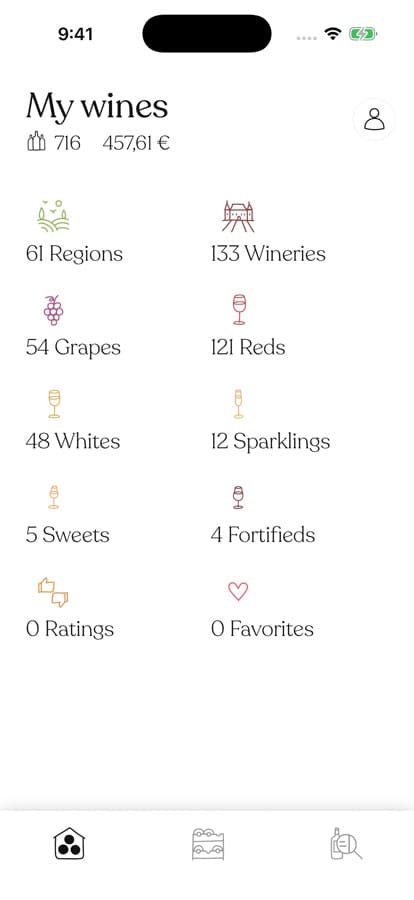 Bottle count and total value, always one glance away.
Recording prices takes a second at purchase and pays off twice. Day to day, it's the honest answer to "how much do we actually spend on wine?". Long term, it's documentation: for a serious claim after theft or damage, insurers want evidence a collection existed and what it cost, and a dated inventory with prices, label photos and storage locations is exactly that. If you started with a deliberate 500-euro cellar, the app will quietly tell you when you've doubled it.
A collection you can slice
Under the totals, the home screen breaks the cellar into the categories wine people actually think in: regions, wineries, grapes, and colour. Tap Regions and each one reports its wines, bottles and colour split.
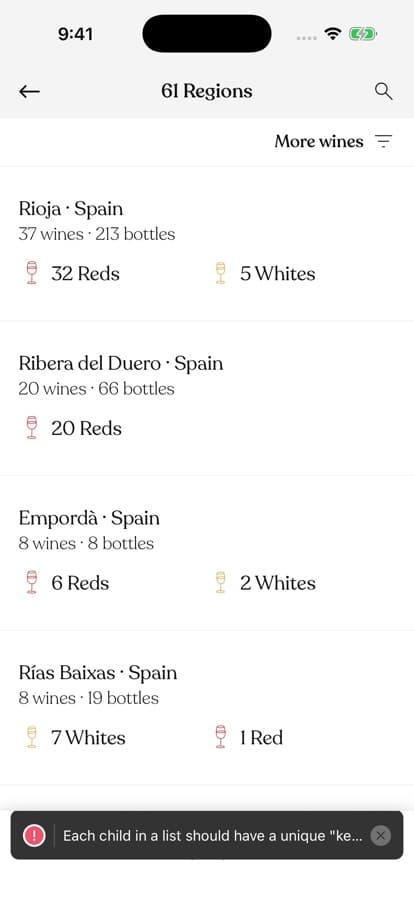 Sixty-one regions, each with its own wine and bottle count: the shape of your taste, in numbers.
Drill into a region and you get its wines with label photos and per-vintage holdings: a vertical of Viña Ardanza sitting next to the single Gran Reserva 890, each with its own count.
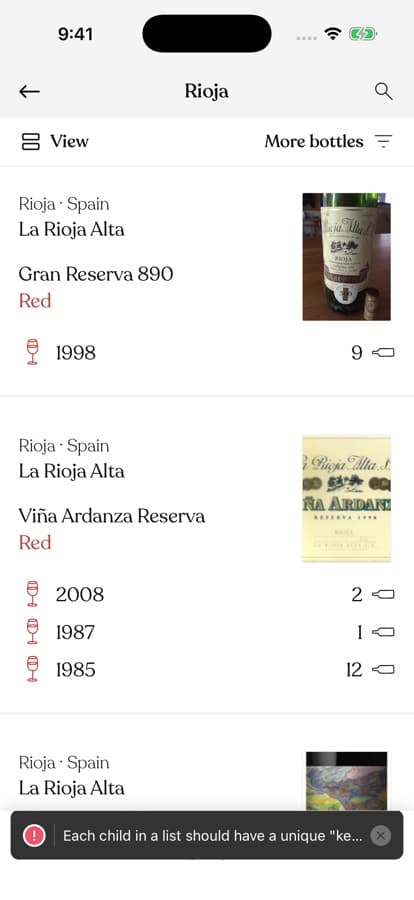 Inside a region: every wine, every vintage, every bottle accounted for.
This is where the numbers turn into decisions. Seeing that Rioja is a third of your cellar is interesting; seeing it while standing in a wine shop is useful. The next purchase either doubles down deliberately or diversifies deliberately — what stops is the accidental accumulation of the same profile in different labels, the pattern behind most stale cellars. Organising the physical cellar tells you where things are; the collection view tells you what the whole thing is.
Frequently Asked Questions
Do I have to enter a price for every bottle?
No. Value tracking works from whatever you record; bottles without prices simply don't add to the total. Most people price the bottles that matter and skip the everyday ones.
Is the total a market valuation?
It's your cost basis: what you paid. That's deliberate: it's stable, documented and what an insurer or a budget conversation needs. Bottles that have appreciated are a pleasant footnote, not the accounting.
What's the fastest way to see where my cellar is unbalanced?
The home grid does it visually: when one region or grape carries a number far ahead of the rest, you're looking at your habit. Whether you feed it or correct it is up to you.
If you couldn't state your cellar's size and value right now, that's the gap the app closes. Download WineNest and know what you own — in bottles and in euros.