
Wine Serving Temperature: The Cheapest Upgrade in Wine
Why 'room temperature' misleads in a 28C kitchen, serving ranges for every wine style, and quick ways to chill a bottle without a thermometer.

Getting wine serving temperature right is the cheapest upgrade in wine. It costs nothing, needs no new glassware and works on every bottle you own: the same 8 € Garnacha tastes brighter a few degrees cooler, and a decent Albariño shows real fruit once it loses its deep fridge chill. Yet most advice still repeats a rule written for houses that no longer exist. If your kitchen sits at 28 °C in July, "room temperature" is not a serving suggestion. It is a warning.
Where "room temperature" came from
The old instruction to serve red wine chambré, brought up to the temperature of the room, made sense when rooms were cold. In the unheated dining rooms of 18th- and 19th-century northern Europe, "room temperature" meant roughly 16–18 °C, and the cellar below sat colder still. A bottle carried upstairs warmed gently and landed exactly where a structured red shows best. As the New Statesman argued back in 2017, the phrase outlived the rooms: central heating pushed northern homes past 21 °C, and a Spanish flat in summer can run ten degrees warmer than anything the rule ever imagined.
Temperature changes what you smell. Serve a red too warm and alcohol evaporates faster than fruit, so the wine smells spirity and tastes heavy and flat. Serve a white too cold and the opposite happens: the aromas barely leave the glass. The WSET warns that chilling below about 6 °C masks flavour in whites, rosés and sparkling wines; its serving guidance dates from 2022 and remains the standard reference.
The ranges worth remembering
Precision matters less than direction, because the glass keeps warming while you drink. These bands, consistent with WSET and Wine Folly, cover almost everything:
- Sparkling wines (Cava, Champagne): 6–8 °C
- Crisp, unoaked whites (Albariño, Verdejo, Pinot Grigio): 7–10 °C
- Rosé: 8–10 °C
- Oaked or full-bodied whites (barrel-fermented Chardonnay, white Rioja): 10–13 °C
- Light, low-tannin reds (Mencía, young Garnacha, Gamay): 12–14 °C
- Structured reds (Rioja Reserva, Ribera del Duero, Cabernet blends): 16–18 °C
Notice the ceiling. Nothing on that list is served above 18 °C, so a red that has never seen a fridge in August is outside the range for every style that exists.
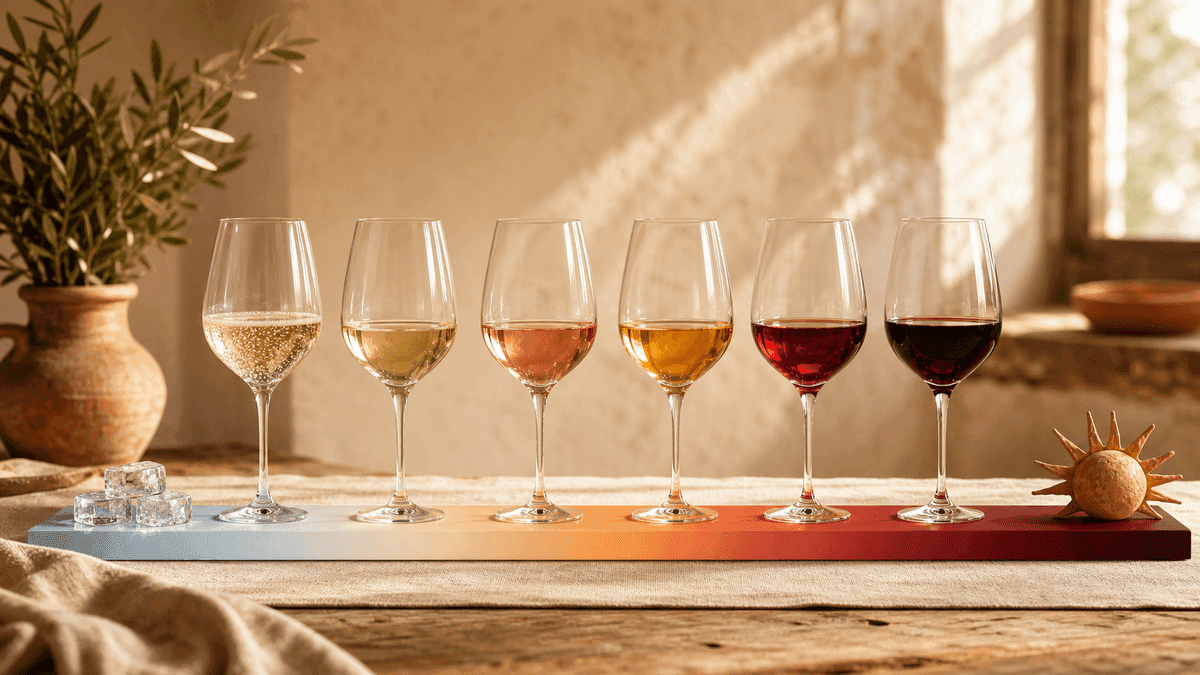 Every style has its own band on the thermometer, and none of them reaches a summer kitchen's 28 °C.
The summer correction
A bottle at serving temperature does not stay there. In a warm room, wine in the glass gains roughly a degree every few minutes, so by the second sip a "perfect" 17 °C red is already past 18. The practical fix: in summer, serve everything about two degrees below target and let the glass do the warming. A structured red poured at 15 °C is at its best ten minutes later; poured at 20 °C, it never gets there. The same logic applies twice over on a terrace at midday. And if your default answer to August is pink, our guide to summer rosé from Provence and Rioja covers which styles hold their freshness in the heat.
This is where a little memory helps. WineNest keeps a taste profile for each wine in your cellar, so when a bottle drank noticeably better with a proper chill, you can record it and see the note the next time you reach for that wine. It will not chill anything for you, but it stops you re-learning the same lesson every summer.
Hitting the target without a thermometer
Three methods handle almost every situation:
- The 20–30 minute rule for reds. Put the bottle in the fridge while you cook. Half an hour takes a red from a warm kitchen down into the mid-teens, which is exactly where you want it.
- The ice-and-water bucket for whites and sparkling. Fill it half with ice, half with water, and submerge the bottle. The WSET's tip is that the water matters: air insulates, water conducts, so ice cubes alone chill far more slowly. Fifteen to twenty minutes takes a bottle from room temperature to sparkling-cold, quicker than a freezer and far quicker than the fridge, which needs the better part of an hour to do the same job.
- The palm test. No thermometer needed. A bottle that feels fridge-cold against your palm is around 5–7 °C, right for Cava or a crisp white straight away. One that feels cool but not cold is roughly cellar temperature, 12–16 °C, right for reds. One that feels like nothing at all is too warm for every wine you own.
When in doubt, serve colder. A too-cold wine fixes itself in the glass within minutes; a too-warm one needs the bucket. One distinction worth keeping clear: the fridge is perfect for the 30-minute serving chill and terrible for keeping bottles long term, as we explain in why the kitchen fridge is the worst place to age wine. If your bottles currently live somewhere warm, start with the basics of storing wine at home.
Chilled red is not a gimmick
The fastest-moving idea in wine right now is that reds belong in the ice bucket too. Fine Dining Lovers lists chillable reds among the trends defining 2026, and The Drinks Business reported in April 2026 that sommeliers in Hong Kong now field direct requests for lighter reds served cold. The logic is stylistic, not fashionable: low-tannin, high-acid reds such as Gamay, Frappato or young Mencía taste juicier and fresher at 12–13 °C. Tannic, structured reds are the exception, since cold makes firm tannin taste harsh; an aged Gran Reserva still deserves its 16–18 °C. Knowing which category a bottle belongs to is half the game, and our guide to Rioja Crianza, Reserva and Gran Reserva drinking windows covers exactly that for Spain's most-cellared reds.
FAQ
Should red wine go in the fridge? For 20–30 minutes before opening, yes, almost always in summer. Only long-term storage in the kitchen fridge is a problem; a brief chill is what the old chambré advice was trying to achieve all along.
I over-chilled a wine. Is it ruined? Not at all. Cup the bowl of the glass in your hands and wait five minutes. Whites and light reds open up as they warm, and you lose nothing along the way.
Does temperature matter for inexpensive wine? More, if anything. A cooler serve flatters simple fruit and softens rough edges, while warmth exaggerates alcohol, which cheap reds often carry in generous amounts.
Serving temperature is a decision you make in the last half hour before the meal, and it swings how a wine tastes more than most upgrades you could pay for. When a bottle surprises you at a certain chill, add it to that wine's notes so the reminder is waiting the next time you pull the cork. Download WineNest and give your cellar a memory.